
COVER STORY
‘Dangerous times’: geopolitical tensions, regulatory failings—APCIA sets its agenda

Insurers must navigate these choppy waters, which is what the content planned for the APCIA’s 2023 conference is designed to do.
The world is experiencing a very dangerous moment. Geopolitical tensions are peaking in many parts of the world, the economic outlook is turbulent—and catastrophe losses, potentially made worse by climate change, continue to surprise. Yet insurers must navigate these choppy waters, which is what the content planned for the 2023 APCIA conference is designed to do.
That is the pitch of David Sampson, the president and chief executive officer of the American Property Casualty Insurance Association (APCIA), speaking ahead of this year’s conference in Boston. He says the central theme of this year’s event is managing risks and the business of risk transfer—but that means assessing the many unknowns and threats for its members.
“This event is all about helping our members, our C-suite executives, get that perspective and identify the different risks that can impact their businesses. There are many macro risks we will explore, but also the regulatory challenges they are grappling with as well as some of the real insurance risks, such as increasingly unpredictable natural catastrophe events including wildfires.”
Starting with some of the macro challenges, Sampson highlights a stellar list of speakers and presenters selected to help delegates better understand them. Lawrence Summers, a US economist who served as Secretary of the Treasury in the Clinton administration, will cover the global economic outlook.
Sampson notes that Summers was one of the first to warn that expenditure during COVID-19 would lead to high inflation. He is very concerned with the record-high US deficit, which he regards as more serious than previous incarnations. “I will be interviewing him and asking him why. Also, if he sees a recessionary risk or whether we will have achieved a soft landing,” Sampson said. “That has a big impact on insurers since it affects their access to capital.”
He highlights a presentation by AB Stoddard, columnist at news website RealClearPolitics, on the political landscape in the US in the context of the next election. Sampson notes that political risk is now a much bigger issue for companies, even in the US, which has rarely been the case in the past. “It will be interesting to hear her observations on the political landscape,” he said.
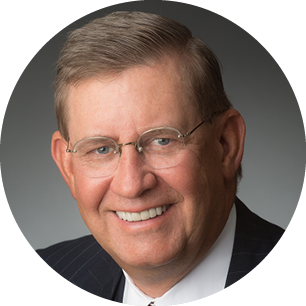
“Third party litigation financing is a central risk for the industry.”
David Sampson, APCIA
Sampson flags the contribution of Hal Brands, Henry Kissinger Distinguished Professor of Global Affairs at the Johns Hopkins School of Advanced International Studies, who he will also interview. He will discuss the geopolitical outlook in more detail, including Russia’s invasion of Ukraine and the situation in Israel and Palestine.
“The world is in a very place dangerous at the moment, so Brands’ perspective will be fascinating,” he said. “We will also discuss the growing influence of China and how aggressive Iran may—or may not—be.”
The hard market
Moving on to some of the specific insurance risks the event will cover, Sampson notes that the overarching theme will be the hard market and its implications for insurers and the end customer. Interconnected with this theme is the issue of legal system abuse in the US and the regulatory environment.
On legal system abuse reforms, Sampson said some states, such as Florida, have made progress. The question now is whether other states can follow suit. “We have seen historic reforms in Florida, but will some other problematic states now advance lawsuit abuse reform?
“Third party litigation financing is a central risk for the industry. We need to get ahead of the curve.”
He added that another principle at stake in many states is allowing insurers the ability to use actuarial tools to apply risk-based underwriting criteria. He says the National Association of Insurance Commissioners remains against such methods on the basis of unfair discrimination. But this prevents insurers doing what they do best: assessing and pricing risk.
“Insurers need to achieve the right rate for the risk they are taking,” he said.
Closely linked to this problem is the length of time it takes regulators to respond to requests to increase rates on policies—in many cases it is taking years. “Yet inflation has been high for some time now and inflation on some replacement costs is far outweighing even that,” Sampson said.
“We cannot address this by fighting fires, we have to look at reducing the exposures.”
“On top of this, catastrophe losses are increasing every year. We need to get rates for the real risk we are taking.” He notes that a consequence of this is insurers rebalancing their books and risk appetites and withdrawing from certain lines of business.
Another issue he notes is that in some states insurers are unable to include the cost of their reinsurance in their rate filings. “That is having a dramatic effect and is why some insurers are looking to limit their exposure in states such as California,” he said.
Risk models
Sampson notes that risk models will be a big talking point: the conference has a special panel discussion on wildfire risk at the conference. The importance of this risk is illustrated by the creation in 2021 of the Wildland Fire Mitigation and Management Commission as part of a directive from Congress under the Infrastructure Investment and Jobs Act to address the threat of catastrophic wildfires in the country. Sampson sits on this commission.
He admits this is a tough issue to tackle, given the combined forces of a drought in the west of the US and changes in population demographics, with more people moving from urban areas to places at risk from wildfires.
“We need to understand that we cannot address this by fighting fires, we have to look at reducing the exposures and creating communities and buildings that can withstand this risk,” he said.
The industry has made great strides on better understanding this risk and building relevant risk models, he says, but adds another regulatory issue with this. In California, for example, insurers cannot use forward-looking risk models.
“We can only look back. But climate change is having an impact, and the risks are changing quickly. There is a desperate need to consider the future risks in those models,” he concluded.
Main image: Shutterstock / DLeng